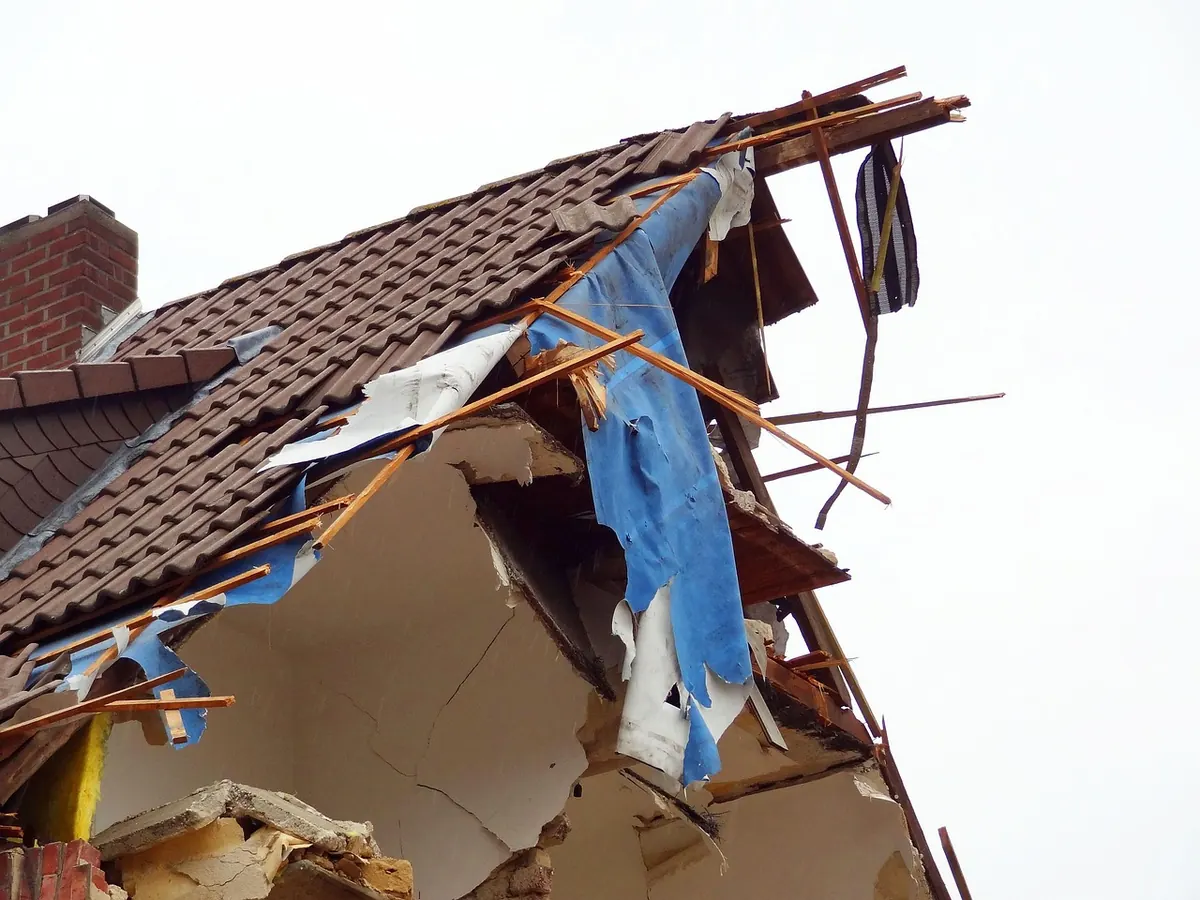
The morning after a storm, most roofs look perfectly fine from the kitchen window. Then a neighbour mentions a tile in their flowerbed, or a faint brown ring appears on the bedroom ceiling, and you start to wonder. Spotting failing tiles early comes down to knowing where to look and what a healthy roof actually looks like. You can cover most of it in fifteen minutes with binoculars, a torch and both feet firmly on the ground.
Start at ground level and work around the house in one direction so you do not miss a side. A roof often tells you it is damaged before you can see the damage itself.
Get hold of a decent pair of binoculars, or use the zoom on your phone and crop the image afterwards. Stand at the far end of the garden and work along one slope at a time, starting with the side that took the brunt of the wind.
Storm damage rarely announces itself. It sits in the small details, and it usually appears first on the windward slope and along the most exposed edges.
A slipped tile slides down and out of line, leaving the tile above it unsupported. Look for rows that have lost their straight edge, or a gap where two tiles should overlap. Lifted tiles are subtler: the bottom corner sits proud of its neighbour, which is enough to let driven rain underneath.
Hail, flying debris and thermal shock all crack tiles. Concrete tiles can laminate, flaking away in layers until only a thin shell remains. Old slate becomes brittle and develops hairline splits you will only spot at an angle in low sunlight. Scan for darker or lighter patches, then check them again when the light is behind the roof rather than in front of it.
Where a tile has gone you should see battens, felt or the back of the tile two rows up. On the ridge, look for missing sections of mortar and ridge tiles sitting at odd angles. Around a chimney, check the lead flashing: if it has been torn or lifted, water will run straight down the stack and into the loft. Verges, valleys and any point where the roof meets a wall deserve a long look.
Take a torch into the loft after dark and switch off the light. Daylight through the roof covering means a gap, and a gap means a leak in the next downpour. While you are up there, look for dark tidemark staining on rafters, damp or sagging roofing felt, and rusty nails. A musty smell is a clue that water has been getting in for a while.
Downstairs, check upstairs ceilings near the chimney breast, dormer windows and external corners. Brown rings, bubbling paint and patches that grow during rain are classic signs of a small, long-running leak. Bear in mind that water often travels sideways along a rafter before it drips, so the damp patch is not always directly under the damage.
Wet tiles, brittle old slates and storm-loosened mortar make a roof far more dangerous than it looks. A tile that has already moved will not take your weight, and a ladder is difficult to set safely against a gutter or a plastic fascia. Do not be tempted, and do not send anyone else up either.
Ground-level inspection and a roofer's ladder survey will tell you almost everything you need to know. If you want a closer view, ask a roofer to take photographs while they are up there, or use a drone at a safe distance from people and property.
Never use mastic or sealant on a wet or frozen roof, and avoid blocking ventilation in the eaves. If water is coming in fast, a tarpaulin fixed by a professional is safer than anything you can improvise.
Minor damage to a garage or outbuilding roof can usually wait a few days. Water entering a habitable room, a missing run of tiles, exposed battens or a sagging roofline should be treated as urgent. So should any movement around a chimney stack or a cracked ridge, because those can point to structural problems rather than a simple slipped tile.
Ask any roofer two questions: is this a repair or a replacement, and what condition are the battens and felt in underneath? A patch over rotten battens will fail again within a season. If something about the roof's structure worries you, take professional advice before agreeing to a large job.
A ten-minute walk around the house after every named storm is the cheapest maintenance you will ever do. Note what you saw, keep photographs with your house paperwork, and deal with one slipped tile before it becomes a dozen. Roofs rarely fail without warning. They just whisper quietly, from the ground, if you know what you are listening for.
Photo: Jan-Mallander / Pixabay
Gable and dormer loft conversions add space in different ways — here's how they compare on headroom, cost, planning...
A practical guide to measuring rise and run on a gable roof, converting them into degrees, and choosing a pitch that...

Yorkshire's stone gables, copings and kneelers do more than keep the rain out — they shape how a house reads from...


Exploring gables, roofs and architectural design..
